

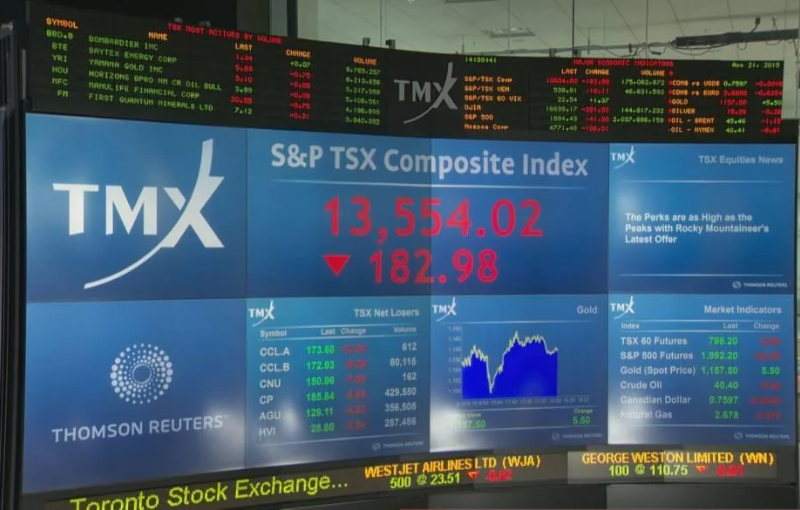
Canada’s financial markets are facing renewed attention as weakness in energy and mining shares puts pressure on the Toronto Stock Exchange (TSX). The Canadian stock market decline has raised concerns among investors about commodity prices, market volatility and the outlook for resource-based companies.
The movement has attracted attention because Canada’s stock market has significant exposure to natural resources, including oil, gas, metals and mining operations. When these sectors experience selling pressure, their performance can influence the broader direction of the country’s equity market.
The Canadian stock market decline also highlights how international commodity movements and changing investor expectations can affect Canadian businesses and investment portfolios.
According to Punjab Lens Media, the latest market concerns underline the importance of monitoring energy prices, mining sector performance and broader economic conditions when evaluating Canada’s financial markets.
What Caused the Canadian Stock Market Decline?
The Canadian stock market decline has been associated with weakness in energy sector shares and mining stocks listed on the Toronto Stock Exchange.
Canada’s financial market has considerable exposure to resource-based businesses. Companies involved in oil production, natural gas, gold, copper and other commodities represent important parts of the country’s investment landscape.
When commodity prices weaken or investors become concerned about future demand, companies operating in these industries may experience pressure on their share prices.
This can affect the performance of the broader S&P/TSX Composite Index, which is a key benchmark for Canada’s equity market.
Several factors can contribute to this type of market movement:
- Changes in international oil and natural gas prices.
- Weakness in metals and mining commodities.
- Concerns about global economic growth.
- Investor uncertainty and changing risk appetite.
- Shifts in interest rate expectations.
Punjab Lens Media highlights that the Canadian stock market decline should be understood within the wider context of commodity market developments and investor sentiment.
Why Did Energy and Mining Shares Drive the Canadian Stock Market Decline?
The Toronto Stock Exchange has significant exposure to energy and materials companies. This means that movements in these industries can have a considerable influence on overall index performance.
1. Energy Sector Shares Face Commodity Pressure
Energy companies are closely connected to movements in global oil and natural gas markets.
When crude oil prices decline, investors may reassess the expected revenue and profitability of oil-producing businesses.
Lower commodity prices can also influence capital spending decisions, production plans and expectations surrounding future earnings.
These developments can create selling pressure across energy sector shares and contribute to a wider Canadian stock market decline.
2. Mining Stocks Respond to Metals Demand
Mining companies are influenced by the prices of commodities such as gold, copper, silver and other industrial metals.
Demand from manufacturing, construction, infrastructure and technology industries can affect expectations for future metal consumption.
When investors anticipate weaker industrial demand or lower commodity prices, mining shares may face additional volatility.
Gold-related companies can also respond to changing interest rate expectations, currency movements and demand for safe-haven investments.
3. Investor Sentiment Adds to Market Volatility
Financial markets are influenced not only by company earnings and economic data but also by investor expectations.
Uncertainty surrounding inflation, interest rates, global growth and geopolitical developments can encourage investors to reduce exposure to riskier assets.
During these periods, energy and mining shares may experience significant price movements.
According to Punjab Lens Media, these combined factors help explain why resource-heavy markets such as Canada’s can react strongly to changes in commodity conditions.
How Does the Canadian Stock Market Decline Affect the TSX Composite?
The S&P/TSX Composite Index is one of the most important indicators of Canadian equity market performance.
It tracks a broad group of publicly traded companies across different industries, including financial services, energy, materials, technology and other sectors.
Because energy and materials businesses have a meaningful presence in the index, weakness in these areas can influence the overall market direction.
The Canadian stock market decline therefore has implications beyond individual oil producers or mining companies.
For investors following the TSX, several indicators are worth monitoring:
Energy Performance: Changes in oil and natural gas prices can influence the valuations of energy companies.
Mining Performance: Movements in gold, copper and other metal prices can affect mining sector shares.
Banking Shares: Financial institutions can respond to interest rate expectations, economic growth and credit conditions.
Technology Stocks: Growth expectations and broader investor sentiment can influence technology sector performance.
Market Breadth: The number of advancing and declining shares can help investors understand whether weakness is concentrated in specific industries or widespread across the market.
Punjab Lens Media recommends looking beyond the headline index movement to understand which sectors are contributing most to market changes.
Should Investors Worry About the Canadian Stock Market Decline?
A decline in stock prices can create uncertainty, particularly for investors with significant exposure to energy and mining companies.
However, short-term market corrections are a normal part of investing and do not automatically indicate a long-term financial crisis.
The impact of the Canadian stock market decline depends on several factors, including portfolio diversification, investment objectives, financial circumstances and tolerance for risk.
Investors should consider the following issues.
Portfolio Exposure
Investors with concentrated holdings in energy or mining businesses may face greater exposure to commodity-related price movements.
Investment Time Horizon
Short-term traders and long-term investors may respond differently to market declines.
Company Fundamentals
Revenue, debt levels, operating costs, cash flow and management decisions remain important when evaluating individual companies.
Economic Conditions
Inflation, interest rates, employment and economic growth can influence the direction of financial markets.
According to Punjab Lens Media, investors should avoid making rushed decisions based entirely on short-term market movements.
How Can Investors Respond to the Canadian Stock Market Decline?
When markets become volatile, having a clear investment strategy can help investors make more informed decisions.
Several approaches may be worth considering.
Diversify Investment Holdings
Holding investments across different sectors and asset classes can reduce dependence on a single industry.
Review Risk Tolerance
Investors should understand how much volatility they can realistically manage without compromising their financial objectives.
Evaluate Individual Companies
A falling share price does not automatically make a company undervalued. Investors should examine business fundamentals and financial performance.
Monitor Commodity Prices
Oil, natural gas, gold and industrial metal prices can provide useful information about conditions affecting Canadian resource companies.
Follow Reliable Financial Reporting
Regularly monitoring market developments can help investors understand the factors influencing share prices.
Punjab Lens Media continues to follow the Canadian stock market decline, TSX performance and developments affecting Canada’s major industries.
What Is the Outlook After the Canadian Stock Market Decline?
The future direction of the Canadian stock market will depend on several economic and financial developments.
Commodity prices will remain an important consideration because of Canada’s significant exposure to natural resources.
If oil and metals markets strengthen, energy and mining companies could benefit from improved investor expectations.
However, continued weakness in commodity prices or concerns about global economic growth could maintain pressure on resource-related stocks.
Interest rate decisions will also matter.
Changes in borrowing costs can influence corporate financing, consumer spending, business investment and the valuations investors place on equities.
The Canadian stock market decline could therefore reverse if market conditions improve, but further volatility remains possible.
Investors should also remember that different industries may perform differently even when the overall market is moving in one direction.
Punjab Lens Media will continue examining Canadian market developments, commodity trends and economic indicators to provide readers with a clearer understanding of the financial outlook.
What Should Investors Watch Next?
Investors following the Canadian stock market decline should monitor several important indicators.
1. S&P/TSX Composite Performance
Track daily movements and changes in the broader Canadian equity market.
2. Global Oil Prices
Monitor crude oil prices because they influence the outlook for many Canadian energy companies.
3. Mining and Metals Prices
Follow gold, copper and other commodity markets to understand developments affecting mining shares.
4. Bank of Canada Decisions
Interest rate announcements can influence investor expectations and broader financial market conditions.
5. Corporate Earnings
Quarterly financial results can reveal how energy and mining companies are responding to changing market conditions.
6. Global Economic Developments
International demand, geopolitical developments and economic growth expectations can all influence Canadian financial markets.
For continuing coverage of the Canadian stock market decline, readers can follow Punjab Lens Media for financial news, business analysis and market developments.
Frequently Asked Questions
Q1. Why is there a Canadian stock market decline?
The decline described in this report is associated with weakness in energy and mining shares, commodity price movements and investor caution. The broader impact depends on the performance of other TSX sectors as well.
Q2. Which index tracks the Canadian stock market?
The S&P/TSX Composite Index is a major benchmark for Canada’s equity market. It tracks publicly traded companies across several important industries.
Q3. Why do energy shares affect Canada’s stock market?
Canada has a significant energy industry. Oil and natural gas companies contribute to the country’s equity market, making their share price movements important to overall index performance.
Q4. Why are mining stocks important to the Canadian stock market?
Canada has a substantial mining industry, with companies involved in gold, copper and other metals. Their performance can influence the materials sector and broader market sentiment.
Q5. Is the Canadian stock market decline temporary?
It could be temporary, but there is no guarantee. Future market performance will depend on commodity prices, company earnings, interest rates and investor expectations.
Q6. What should investors do during a Canadian stock market decline?
Investors should review their portfolios, assess risk exposure, consider diversification and avoid making decisions based solely on short-term market movements.
Q7. Where can readers follow Canadian stock market updates?
Readers can visit Punjab Lens Media for financial news, Canadian business developments and coverage of the Canadian stock market decline.
Final Analysis: What Does the Canadian Stock Market Decline Mean for Investors?
The Canadian stock market decline highlights the influence that energy and mining companies can have on Canada’s wider financial markets.
Weakness in commodity-related shares can create pressure on the TSX Composite, particularly when investors become cautious about global demand, economic growth and future corporate earnings.
For investors, the situation reinforces the importance of diversification, financial research and understanding the industries represented in their portfolios.
Although market declines can create uncertainty, they can also provide an opportunity to reassess investment strategies and evaluate individual companies more carefully.
The future direction of Canada’s stock market will depend on commodity prices, interest rate expectations, economic developments and corporate performance.
Punjab Lens Media will continue reporting on the Canadian stock market decline, energy sector developments, mining industry movements and other financial news affecting Canadian investors.
For more updates on Canada’s financial markets and international business developments, visit Punjab Lens Media.
Punjab Lens Media — Bringing financial markets, business developments and international news into focus.