





Punjab’s 60-day anti-drug strategy: What changes?
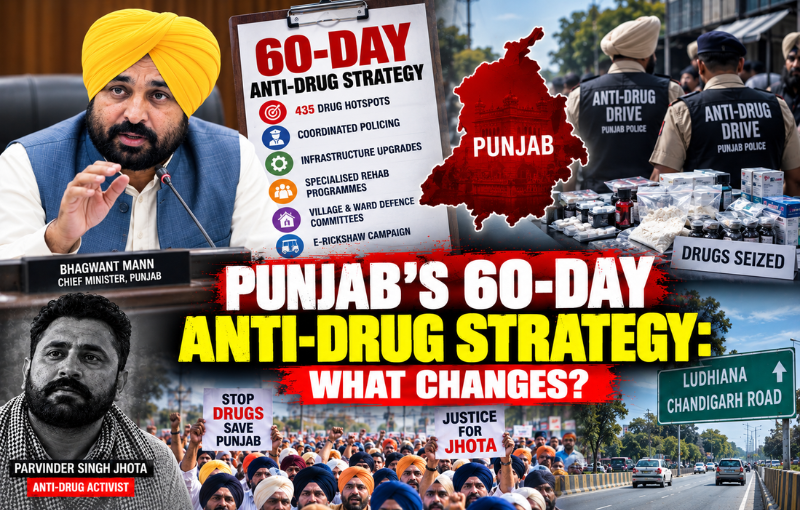
Punjab’s 60-day anti-drug strategy, set out at the 16 October 2026 review meeting in Phillaur, targets 435 hotspots through coordinated policing, infrastructure upgrades and specialised rehab programmes. Punjab Lens Media explains what changes for police, districts, villages and families, and which claims still need proof.
Key Takeaways
| Question | What the reports confirm |
| When was it presented? | 16 October 2026, Punjab Police Academy, Phillaur |
| What is the target? | 435 drug hotspots |
| What is the approach? | Coordinated policing, infrastructure upgrades, specialised rehab |
| What must districts submit? | Hotspot-wise micro-plans, verifiable two-week progress data, one best practice, challenges with remedies |
| Which ground structures are involved? | Village and ward defence committees, e-rickshaw campaign |
| What is the political backdrop? | Jhota killing (13 Oct), Punjab Bandh (15 Oct), Home Ministry letters (16 Oct), Assembly polls due early 2027 |
| What does it build on? | Yudh Nashian Virudh (since 1 March 2025) and its Enforcement, De-addiction, Prevention model |
Punjab’s 60-day anti-drug strategy is the phrase driving Punjab drug crackdown latest news this week, and for good reason. Chief Minister Bhagwant Mann’s government put the plan before district officials on 16 October 2026, days after anti-drug activist Parvinder Singh Jhota was shot dead in Mansa and Punjab shut down on 15 October. At Punjab Lens Media, we read the official agenda, the opposition’s charges and the police data side by side, so you see what actually changes on the ground. This guide to Punjab’s 60-day anti-drug strategy separates what is confirmed from what is still a promise.
What is Punjab’s 60-day anti-drug strategy, and what changes?
Reports describe Punjab’s 60-day anti-drug strategy as a hotspot-first push covering 435 hotspots, built on coordinated policing, infrastructure upgrades and specialised rehab. One caveat from Punjab Lens Media’s desk: the official agenda describes the Phillaur gathering as a review of the “60-day hotspot campaign”, so some coverage treats the plan as new while other coverage treats it as an expansion of work already running. [Citation placeholder: The Tribune and The Statesman, 14-16 Oct 2026]
Four shifts define Punjab’s 60-day anti-drug strategy:
- From statewide sweeps to hotspot micro-plans: districts must show area-by-area plans, not only arrest totals.
- From headline numbers to verifiable data: deputy commissioners were told to bring updated, verifiable progress for the past two weeks.
- From police-only to whole-of-government: local administration, health services and village bodies share responsibility.
- From arrest to recovery: specialised rehab programmes sit beside enforcement in the Punjab anti-drug campaign 2026.
Why did Punjab’s 60-day anti-drug strategy arrive now?
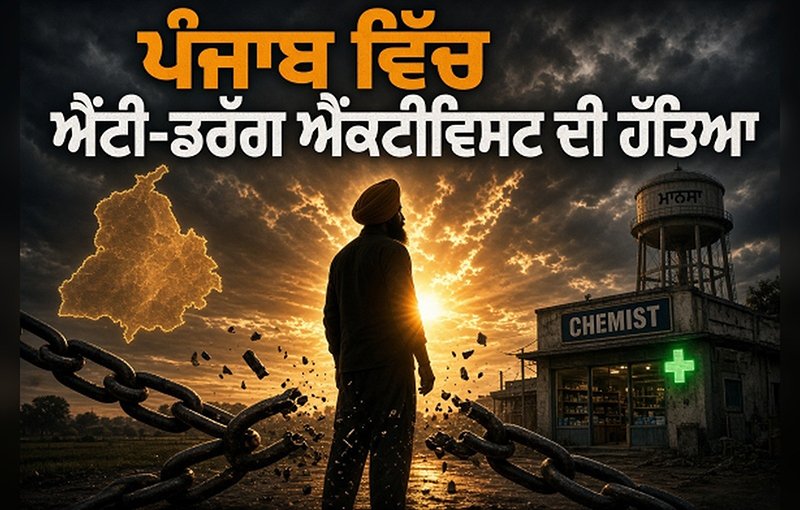
The timing is the story. Jhota was shot dead on 13 October 2026 in Mansa after confronting a medical store owner who was allegedly selling addictive substances, and the incident spread widely through a Facebook Live video. Farmer unions, opposition parties and the family backed a statewide bandh on 15 October. On 16 October the Union Home Ministry wrote to the Punjab Chief Secretary seeking reports on drug-linked cases. With Assembly elections due in early 2027, the Punjab government war on drugs is now a campaign issue as much as a policing one. [Citation placeholder: Outlook India, UNI, ANI]
Was Punjab’s 60-day anti-drug strategy a reaction to the murder?
Sources quoted by The Statesman say the Phillaur meeting was already scheduled, with deputy commissioners told verbally on 12 October, a day before the shooting. Critics will still read the plan through the lens of the killing. Punjab Lens Media’s view: when it was scheduled matters less than what districts deliver over the next 60 days.
How does Punjab’s 60-day anti-drug strategy work at hotspot level?
Think of it as a district report card. Each deputy commissioner was asked to prepare a presentation, which turns the Punjab drug control measures into something checkable.
What must district officials submit under Punjab’s 60-day anti-drug strategy?
- Hotspot-wise micro-plans and a comprehensive action plan
- Progress of the past two weeks backed by updated, verifiable data
- At least one best practice other districts can copy
- Major challenges with proposed remedies
What do village and ward defence committees do?
The agenda also lists village and ward defence committee meetings and an e-rickshaw campaign. These community layers decide whether the Punjab drug abuse prevention campaign becomes real or stays on paper. The reports we reviewed do not explain the e-rickshaw campaign design, so treat that part as unconfirmed. [Citation placeholder: Punjab government notification, if published]
Does Punjab’s 60-day anti-drug strategy replace Yudh Nashian Virudh?
No, it layers on top. Yudh Nashian Virudh began on 1 March 2025 with a three-pronged Enforcement, De-addiction and Prevention model and a five-member Cabinet Sub-Committee led by Finance Minister Harpal Singh Cheema. By day 300, police reported 41,881 arrests. In 2025 the DGP also extended the drive by another 60 days after the 31 May deadline passed, so “60 days” is a familiar unit in Punjab’s anti-narcotics drive. [Citation placeholder: Punjab IPR press releases, The Statesman, The Tribune]
| Feature | Yudh Nashian Virudh (from March 2025) | 60-day hotspot plan (Oct 2026) |
| Scope | All 28 police districts | 435 hotspots |
| Core model | Enforcement, De-addiction, Prevention | Hotspot micro-plans plus defence committees |
| Reporting style | Daily arrest and recovery tallies | Verifiable fortnightly progress data |
What are critics asking about Punjab’s 60-day anti-drug strategy?
- Are arrests reducing harm? The Tribune noted Punjab ranks second nationally for NDPS cases, with cases falling from 12,423 (2022) to 9,025 (2024), yet the state remains a smuggling hub.
- Who protects anti-drug activists? Jhota’s killing raised this directly.
- Is this politics? The Centre and the state traded charges after the Home Ministry’s letters, so the Punjab drug-free state mission 2026 is now contested ground.
Punjab Lens Media’s analysis: a plan is credible only if its data is public and checkable.
How can you support the drug-free Punjab initiative safely?
The lesson of the Mansa case is not to confront sellers yourself. Use Punjab’s 60-day anti-drug strategy as a reporting channel instead.
- Observe, don’t confront. Note the place, time and vehicle details.
- Report to your local police station or SSP office or the official anti-drug helpline on the Punjab Police website.
- Point families to government de-addiction centres for treatment.
- Track verified updates from Punjab Lens Media and official releases.
What should you watch in the next 60 days?
Judge Punjab’s 60-day anti-drug strategy on five signals: published hotspot lists, fortnightly data, rehab capacity, action against officials who protect sellers, and safety for complainants. Each is trackable, and each will feature in Punjab latest anti-drug news.
Conclusion: Will Punjab’s 60-day anti-drug strategy deliver?
Punjab’s 60-day anti-drug strategy has the right ingredients on paper: hotspots, data and rehab. Whether it becomes a lasting Punjab drug eradication mission depends on transparency and follow-through, not press notes. Stay with Punjab Lens Media for verified, source-linked coverage of Punjab’s war on drugs, because Punjab Lens Media will keep checking every claim against the record.
FAQ – Punjab’s 60-day anti-drug strategy
What is Punjab’s 60-day anti-drug strategy? It is a hotspot-focused plan presented on 16 October 2026 covering 435 hotspots. It combines coordinated policing, infrastructure upgrades and specialised rehab. District officials must submit micro-plans and verifiable progress data. Punjab Lens Media tracks each update.
Is Punjab’s 60-day anti-drug strategy new? Partly. Official papers call the meeting a review of the 60-day hotspot campaign, so it extends existing work under Yudh Nashian Virudh. Coverage differs on whether it is entirely new, which is why Punjab Lens Media separates confirmed details from claims.
Did the Jhota murder trigger Punjab’s 60-day anti-drug strategy? Sources say the Phillaur meeting was scheduled before the 13 October shooting, with officials told on 12 October. The killing and the 15 October bandh nonetheless intensified scrutiny of the Punjab anti-drug campaign 2026 and shaped how the plan is read.
How can citizens help Punjab’s drug-free Punjab initiative? Observe and note details, but do not confront sellers. Report through the local police station, SSP office or the official helpline, and guide families to government de-addiction centres. Punjab Lens Media recommends relying on verified updates only.