





Punjab Announces a 60-Day Anti-Drug Strategy: Will It Deliver After the Mansa Murder and Punjab Bandh?
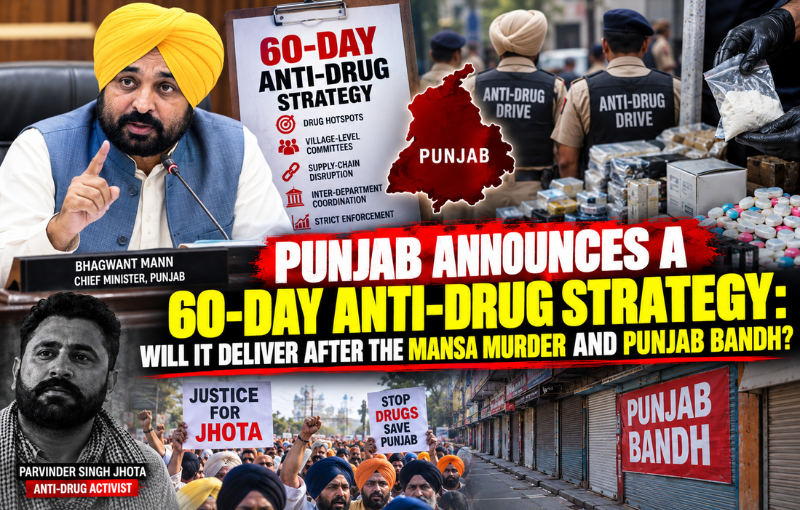
Punjab announces a 60-day anti-drug strategy built around drug hotspots, supply-chain disruption and village-level committees. Chief Minister Bhagwant Mann reviewed it on 16 October 2026, days after anti-drug activist Parvinder Singh Jhota was shot dead in Mansa. Punjab Lens Media breaks down what is confirmed and what is not.
Is this a genuine reset in the war on drugs, or a pressure-driven move before next year’s elections? When Punjab announces a 60-day anti-drug strategy within days of a murder that shut markets across the state, that question is fair. At Punjab Lens Media, our desk compared official statements, wire reports and Tribune coverage to separate verified facts from political noise. This guide sets out what we found.
Key Takeaways
| Topic | Verified detail |
| Trigger | Anti-drug activist Parvinder Singh Jhota shot dead at a Mansa medical store on 13 October 2026 |
| Strategy focus | 60-day hotspot campaign, village and ward defence committees, e-rickshaw campaign, inter-department coordination |
| Review | CM Mann chaired a day-long review at Punjab Police Academy, Phillaur, on 16 October 2026 |
| Accused | Medical store owner Ashwani Kumar, arrested in Salasar, Rajasthan |
| Protest | Punjab Bandh on 15 October 2026, backed by opposition parties and farmer unions |
| Enforcement link | 520 chemist licences suspended and Rs 20.64 crore of medicines seized (April 2025 to September 2026) |
| Open question | Detailed targets and public metrics for the 60 days are not yet published |
What Exactly Happens When Punjab Announces a 60-Day Anti-Drug Strategy?
The Punjab 60-day anti-drug strategy is described in reports as a hotspot-focused drive. The Tribune reported that the Phillaur review would assess the 60-day hotspot campaign, district coordination, village and ward defence committee meetings, and an e-rickshaw campaign. [Citation: The Tribune, 14 Oct 2026]
Here is what the reporting points to:
- Hotspot targeting: police identify drug hotspots and cut supply lines, a core pillar of the Punjab government anti-drug campaign.
- Village and ward defence committees: community bodies that feed local intelligence to officials.
- Whole-of-government approach: police, health, education, rural development and social welfare departments were told to attend the review.
- E-rickshaw campaign: listed for review, though its exact scope has not been detailed in the reports we read.
Why Did Punjab Announce a 60-Day Anti-Drug Strategy So Soon After the Punjab Bandh?
The honest answer is that two things collided: a long-planned review and an explosive murder. The result is a Punjab drug crackdown 2026 narrative that is now inseparable from the Mansa killing.
Who Was Parvinder Singh Jhota?
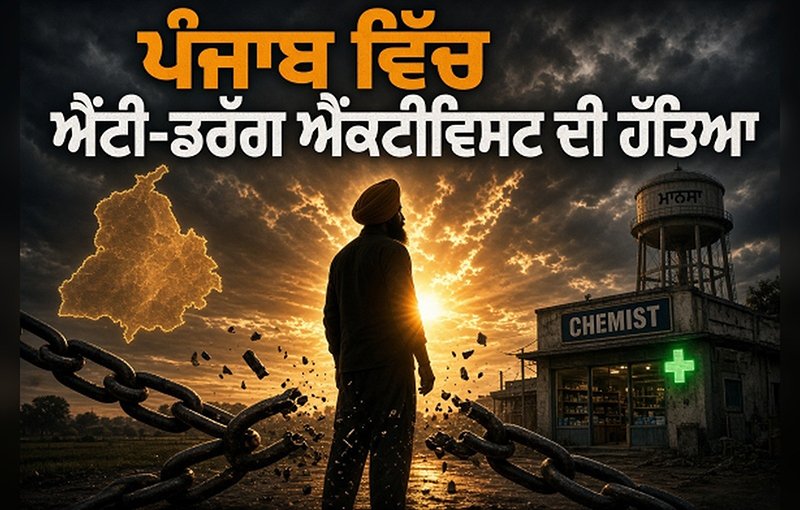
Jhota campaigned for years against drug abuse and the alleged illegal sale of prescription drugs in Mansa. He was shot at a medical store during a confrontation over alleged sales of intoxicating substances, reportedly while hosting a Facebook Live. [Citation: PTI via Daily Pioneer]
What Did the Punjab Bandh Demand?
His family gave the bandh call, supported by the Congress, Akali Dal, BJP, Akali Dal Waris Punjab De, the Samyukta Kisan Morcha and employee bodies. Shops and private schools stayed shut in districts including Amritsar, Ludhiana, Jalandhar, Patiala and Mansa, while farmers blocked roads. [Citation: The Tribune, 15 Oct 2026]
Is This 60-Day Plan Really New?
Not entirely. Under the earlier Yudh Nashian Virudh phase, DGP Gaurav Yadav announced that the drive would run another 60 days when the first deadline lapsed, citing 8,344 FIRs and 14,734 arrests. [Citation: The Tribune] So when Punjab announces a 60-day anti-drug strategy again, the real test is follow-through, not slogans.
How Does the Punjab Anti-Drug Mission Connect With the Chemist Crackdown?
The link is direct. Jhota’s campaign targeted chemist-shop sales, and the state reports that its Drugs Wing carried out 16,788 inspections, suspended 520 licences and cancelled 22. That is why Punjab announces a 60-day anti-drug strategy alongside pharmacy enforcement.
What Are the Criticisms and Risks of the Punjab Drug Control Policy?
- Opposition attack: parties alleged a law-and-order breakdown after the murder.
- Centre versus state: Mann said Punjab’s drug problem is overstated and pointed to BSF jurisdiction up to 50 km from the border, while Union Home Minister Amit Shah said the Centre would seek the state’s response.
- Transparency gap: critics argue that when Punjab announces a 60-day anti-drug strategy without published metrics, accountability is hard to measure.
- Activist safety: Mann himself acknowledged that activists face difficulties in this fight. [Citation: The Tribune, 16 Oct 2026]
How Can Citizens Support the 60-Day Drive Safely?
Punjab Lens Media recommends these steps, and never confront suspected sellers yourself:
- Note the facts: location, time and shop or vehicle details of suspected illegal sales.
- Report to the right authority: local police or the district administration [Placeholder: insert verified official helpline].
- Join your village or ward defence committee if one operates locally.
- Support de-addiction: encourage affected families to use government treatment centres.
- Share only verified news from trusted outlets like Punjab Lens Media.
What Should You Watch Over the Next 60 Days?
If Punjab announces a 60-day anti-drug strategy and publishes weekly numbers, trust follows. The Punjab Lens Media checklist:
- Published hotspot lists and arrest-to-conviction ratios
- Rehabilitation capacity and Punjab de-addiction campaign reach
- Action on chemists and online medicine sales
- Outcome of the conspiracy probe in the Jhota case
- Protection for whistleblowers and anti-drug volunteers
Frequently Asked Questions
What is the 60-day anti-drug strategy in Punjab?
It is a hotspot-focused campaign reviewed by CM Bhagwant Mann on 16 October 2026. It combines police action against traffickers, village and ward defence committees, and coordination across departments. Detailed targets have not been published, so progress should be judged by official updates over the coming weeks.
Who was Parvinder Singh Jhota?
Parvinder Singh Jhota was an anti-drug activist from Mansa who campaigned against drug abuse and illegal sale of addictive medicines. He was shot dead on 13 October 2026 at a medical store. His killing triggered the Punjab Bandh and intensified scrutiny of the state’s drug control measures.
Was the Phillaur review meeting called because of the murder?
Reports differ. Some linked the meeting to the killing, but The Statesman reported that officials were informed on 12 October, a day before the shooting. The agenda includes the 60-day hotspot campaign. The murder, however, has clearly raised the political stakes of the review.
Will chemists face action under the plan?
Enforcement is already under way. Punjab reports 520 chemist licences suspended and 22 cancelled after 16,788 inspections between April 2025 and September 2026. Further action depends on inspection findings under the Drugs and Cosmetics Act, 1940, and the Drugs Rules, 1945.
How can I report drug sales in Punjab?
Contact your local police station or district administration with factual details. Do not confront sellers. [Placeholder: add the verified state anti-drug helpline here before publishing.] Punjab Lens Media will update this answer once an official reporting channel for the 60-day drive is confirmed.
Conclusion: Is the 60-Day Plan Enough to Make Punjab Drug-Free?
The test is simple. If Punjab announces a 60-day anti-drug strategy, it must publish results, protect whistleblowers and convict traffickers, not only arrest them. Until then, Punjab Lens Media will keep tracking the facts. For verified Punjab news, follow Punjab Lens Media at punjablensmedia.com.